
Social Media Abuse: Why Athletes Need More Than Just a Break From Online Criticism
Sports psychology professor Leon van Niekerk says athletes must learn to assess online criticism without allowing social media reactions to outweigh feedback from coaches, family and trusted friends.
Elite athletes cannot always afford to walk away from social media, even when online criticism becomes overwhelming. With digital platforms increasingly tied to sponsorships, personal branding and professional opportunities, knowing how to manage abuse and negative feedback has become an important part of protecting athletes’ mental well-being.
That was among the key messages from Professor Leon van Niekerk, a sports psychology professor, during a webinar hosted by the South African Sports Confederation and Olympic Committee (SASCOC) High-Performance Psychology Working Group on Thursday, 22 October.
The webinar, titled Cyberbullying, Mental Health and the Psychological Realities of Elite Sport, examined the impact of online abuse on athletes and the psychological challenges that come with competing in an increasingly connected sporting environment.
Van Niekerk’s contribution highlighted the need for athletes to develop strategies for processing online comments rather than treating every reaction from spectators and followers as an accurate reflection of their abilities or worth.
Why switching off social media is not always the answer
Taking a break from social media can offer athletes temporary relief from hurtful comments, personal attacks and the pressure of constant public scrutiny. However, Van Niekerk cautioned that avoidance alone is unlikely to provide a lasting solution.
“Avoidance is a good short term strategy,” he said, explaining that stepping away from a platform can help athletes distance themselves from negative comments when necessary.
The challenge, he suggested, is determining what happens when they return to those platforms and encounter criticism again.
For professional and elite athletes, withdrawing from social media indefinitely is not always practical. Beyond connecting with supporters, digital platforms have become important tools for marketing, maintaining public profiles and attracting sponsorship opportunities.
Athletes are often expected to remain visible, communicate with their audiences and share updates about their careers. This can make complete disengagement difficult, even when their online experiences begin to affect their psychological well-being.
The issue, therefore, extends beyond whether athletes should read negative comments. It also concerns how they interpret those comments and decide which feedback deserves their attention.
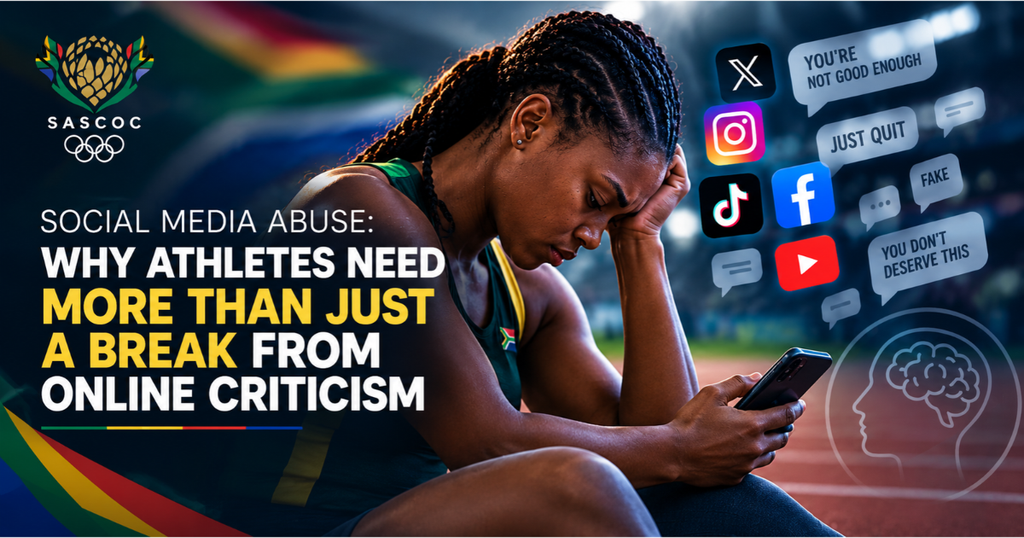
Why Athletes Need More Than Just A Break From Online Criticism (Graphic: SizaNazo365)
Not every online opinion deserves to be believed
Van Niekerk warned that athletes risk making a serious mistake when they accept everything posted about them online as the truth.
“Anyone can say anything and you gonna accept it as if it is the truth,” he said, highlighting the importance of developing a considered approach to online feedback.
In competitive sport, criticism is unavoidable. Athletes can face intense reactions after poor performances, missed opportunities, controversial decisions or disappointing results. Social media can amplify these reactions, allowing individual opinions to reach athletes directly and sometimes attracting further hostility from other users.
However, the volume of comments or the confidence with which an opinion is expressed does not necessarily make it accurate.
For athletes, distinguishing between constructive criticism, uninformed opinion and deliberate abuse is an important part of navigating the digital environment.
Van Niekerk encouraged athletes to consider what online comments mean to them and how they intend to respond, rather than allowing the opinions of strangers to determine how they view themselves.
This distinction is particularly important when criticism becomes personal or crosses the line into cyberbullying. Abuse should not be mistaken for legitimate performance analysis simply because it appears in a public forum.
Whose feedback matters most?
Another important consideration raised by Van Niekerk was the weight athletes give to opinions from different sources.
He questioned whether comments from social media followers should carry more influence than feedback from coaches, family members and friends.
For athletes, the ability to put online reactions into perspective can help prevent the digital crowd from becoming the primary measure of their performance or personal worth.
Feedback from a coach, for example, may be based on technical understanding, preparation and an athlete’s broader development. Comments from family and trusted friends may offer perspective that is not influenced by the immediate emotions surrounding a competition.
This does not mean athletes should automatically dismiss every criticism they encounter online. Rather, they need to assess its credibility, relevance and usefulness before deciding how much importance to attach to it.
Van Niekerk’s argument points to a practical challenge for athletes: learning to separate feedback that can contribute to improvement from comments that are intended to provoke, humiliate or undermine them.

University of Fort Hare Sports Psychology Professor Leon van Niekerk (Image: UFH/Facebook)
A wider safeguarding concern for South African sport
The discussion comes amid growing recognition that online abuse is not simply an unpleasant consequence of being a public figure. For athletes, its effects can extend beyond their social media accounts and into their personal lives, confidence and sporting careers.
The pressure to maintain an online presence while dealing with hostile comments places athletes in a difficult position. They may need digital platforms to build their careers, yet those same platforms can expose them to abuse that is difficult to escape.
Van Niekerk’s contribution reinforces the importance of equipping athletes with practical psychological strategies for navigating this environment. Taking a break when necessary can help, but athletes also need to develop ways of evaluating criticism, maintaining perspective and deciding how to respond when they encounter harmful content.
The responsibility should not rest on athletes alone. Sporting organisations also have a role to play in ensuring that athletes experiencing serious online harassment know where to seek support and how to report abuse.
As the conversation around cyberbullying and mental health in sport continues, the challenge is to ensure that athletes are not left to manage the psychological consequences of online hostility without adequate support.
For Van Niekerk, one of the central considerations is clear: athletes need to be deliberate about how they engage with social media and, crucially, whose opinions they allow to shape their thinking.
In an environment where online visibility can be essential to a sporting career, learning to navigate criticism may be just as important as knowing when to step away from the screen.
Pingback: Sport Psychiatry: Why Coaches Could Play a Crucial Role in Protecting Young Athletes’ Mental Health - SizaNazo365