
Safety Tips for Runners and Cyclists Amid Renewed Focus on Outdoor Risks
The recent breakthrough in the investigation into the murder of runner Elizabeth “Tsontso” Moselakgomo in September has renewed hope that justice will be served, but concerns about the safety of people exercising outdoors remain. In a country grappling with gender-based violence (GBV), the safety of women exercising in public spaces is a particular concern, as they may face heightened vulnerability to certain forms of violence. A private security expert believes the private security sector also has an important role to play in helping improve safety for runners, cyclists and other outdoor enthusiasts.
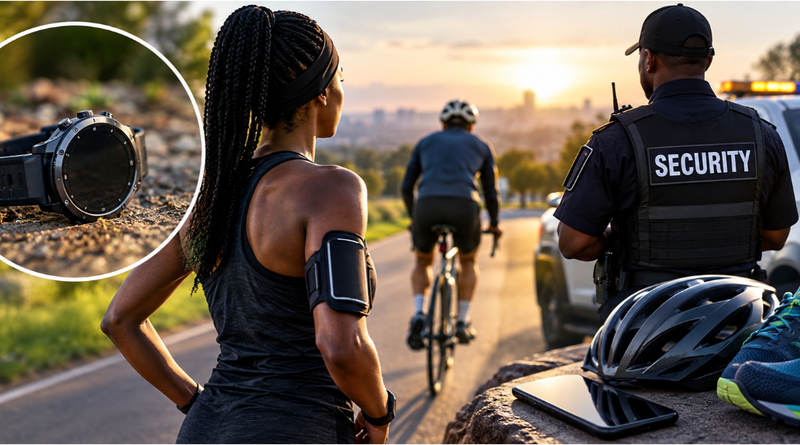
Three suspects appeared in the Kempton Park Magistrate’s Court on Monday, following their arrest in connection with the stolen Garmin smartwatch belonging to Moselakgomo.
The suspects, identified as Kenneth Chibuzor, Stephen Sekhukhune and Danial Moat, were reportedly arrested after being found in possession of the smartwatch.
Two of the accused were granted bail of R10,000 each, while the third is expected to return to court on Monday.
However, the charges against the men relate to the theft, acquisition and possession of the stolen smartwatch, rather than Moselakgomo’s murder. Police have indicated that the murder investigation remains ongoing and at an advanced stage, but no one has been formally charged with her killing.
Moselakgomo went missing on 9 September after leaving her home in Rhodesfield, Kempton Park, for an afternoon jog. Her partially clothed body was discovered in bushes in Kempton Park on 12 September. She was laid to rest at her ancestral home in Phake, Mpumalanga, on 20 September.
The developments have brought renewed attention to the risks faced by people who exercise outdoors, particularly those who run or cycle alone.
Security companies urged to step up patrols
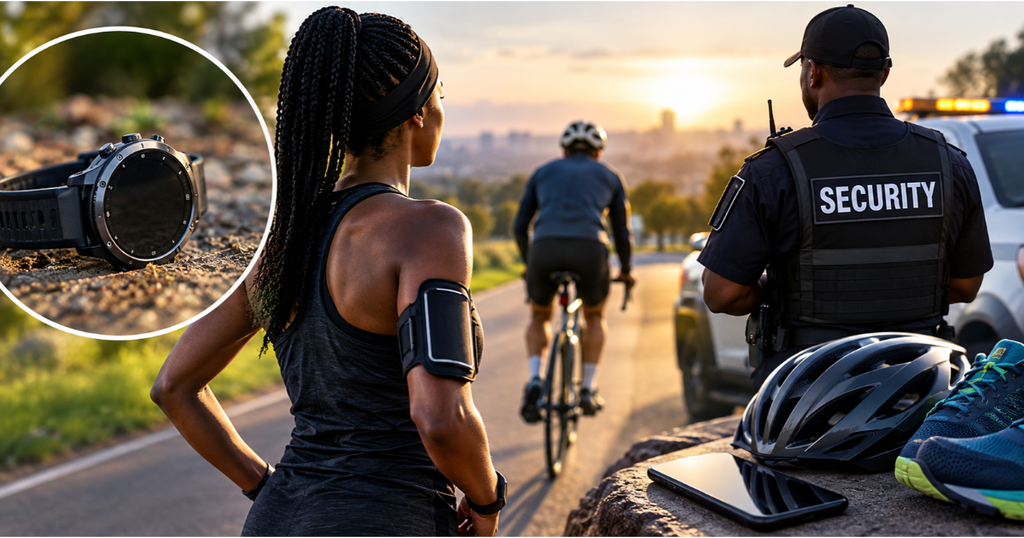
While the police remain primarily responsible for crime prevention, law enforcement and criminal investigations, chief executive officer of Seek Security Lee Orren believes private security companies can also contribute to making public spaces safer through visible patrols, community engagement and crime-prevention initiatives.
Orren said his company had responded to growing safety concerns by increasing patrols and encouraging other security providers to adopt similar measures.
“We have decided to take a stand and say enough is enough. We have increased patrols and have challenged other security companies to say we put extra vehicles on the road and start riding patrols,” Orren said.
He explained that security personnel could also use their patrols to engage with runners and cyclists, distributing pamphlets containing safety tips and information about potential dangers.
The approach would allow security companies to do more than respond to incidents after they occur, helping raise awareness and encouraging people to take precautions before heading outdoors.
Safety tips for runners and cyclists
While increased patrols could help improve visibility and awareness, Orren also urged individuals to take responsibility for their own safety when exercising.
He recommended that anyone planning to run, walk, cycle or hike should inform a family member about their intended route and how long they expect to be away.
“When you go out for a run or a jog, walk, cycling, a hike or whatever, always inform a family member where you are going, what your route is, how long you are planning to go exercise,” he said.
Orren also advised outdoor enthusiasts to share their live location with a family member whenever possible and to keep important emergency contacts readily accessible.
“If possible, always share a live location with a family member. Always have a number of a family member, police or security company on speed dial,” he added.
He further encouraged runners and cyclists to join organised groups or clubs instead of exercising alone.
“Join a group like a running or cycling club so that you are not alone,” Orren said.
These precautions can help family members or other trusted contacts know where someone is exercising and when they might be expected to return.
The risks extend beyond personal safety
The concerns facing outdoor athletes are not limited to the risk of physical harm. Their equipment and personal belongings can also make them targets for criminals.
High-end bicycles can be stolen for resale or dismantled for parts, while smartwatches and fitness trackers can be sold on the second-hand market or stripped for components. Smartphones and expensive running shoes are other items that may attract criminals.
The recovery of Moselakgomo’s Garmin smartwatch has highlighted the importance of protecting personal belongings, although the circumstances of its theft do not, on their own, establish a motive for her murder.
For runners and cyclists, remaining alert to their surroundings, planning routes carefully, sharing location information and avoiding isolation where possible are practical steps that may help reduce exposure to risk.
Orren’s call for increased security patrols also places the spotlight on the potential contribution of private security companies, particularly in areas regularly used by people exercising outdoors.
As the investigation into Moselakgomo’s murder continues, the case has become a reminder of the importance of safety for South Africans who use public roads, parks and open spaces to stay active. While individual precautions cannot eliminate every danger, cooperation between communities, security providers and law enforcement could form part of a broader effort to make outdoor exercise safer.