From a Garage Gym to Elite Training: R500,000 Boost Raises Hopes for Women’s Boxing
While South Africa’s top female boxers could benefit from high-performance training, promoter Zodwa Lubisi hopes new funding will also reach struggling fighters like teenage Mpumalanga boxers Alima Nkosi and her younger sister Nosimphiwe, who train without a punching bag.
South African women’s boxing has received a R500,000 boost from FirstRand Bank, raising hopes of better training facilities, stronger athlete support and more opportunities to compete internationally.
But for boxing manager Colleen McAusland and promoter Zodwa Lubisi, the significance of the investment goes beyond the announcement. It is about giving talented female fighters the resources they need to turn their potential into successful careers.
Boxing South Africa (BSA) announced the funding on 9 October 2026, following efforts spearheaded by Women in Boxing Committee chairperson Rina Subotzky, working alongside BSA leadership.
The proposed investment will cover training equipment, high-performance development, athlete support and initiatives to increase the visibility of women’s boxing.
Of the planned expenditure, R300,000 is earmarked for equipment, according to Lubisi, who believes this could make a meaningful difference to boxers training in difficult conditions.
McAusland: ‘It’s long overdue’
Award-winning boxing manager Colleen McAusland has welcomed the announcement as an important step towards addressing the longstanding challenges facing female boxers in South Africa.
Speaking to SizaNazo365, the founder of McAusland Boxing Management said the funding could improve access to training resources and help athletes compete at a higher level.
“My initial reaction was very positive because I believe this is a great step for women’s boxing in South Africa. It’s long overdue,” McAusland said.
She believes the proposed high-performance programme for national champions and elite athletes could be particularly valuable in preparing South African boxers for international competition.
“You know, some of the funding is going towards our top athletes, our national champions, to go for elite training. So it will help them to compete at a higher level internationally,” she said.
McAusland also sees the investment as a sign that women’s boxing is finally receiving greater recognition.
She hopes it will encourage more young women to take up the sport while giving established fighters the support they need to progress.
“For me, the most important thing is that funding creates real opportunities and a lasting impact on the sport,” she said.
Her stable includes Simangele “Smash” Hadebe, a multi-time African Boxing Union (ABU) and WBO Africa flyweight champion.
Another promising boxer under her management, Larissa Godrich, made a winning professional debut in September at the Mpumalanga Women in Boxing Series, promoted by Lubisi.
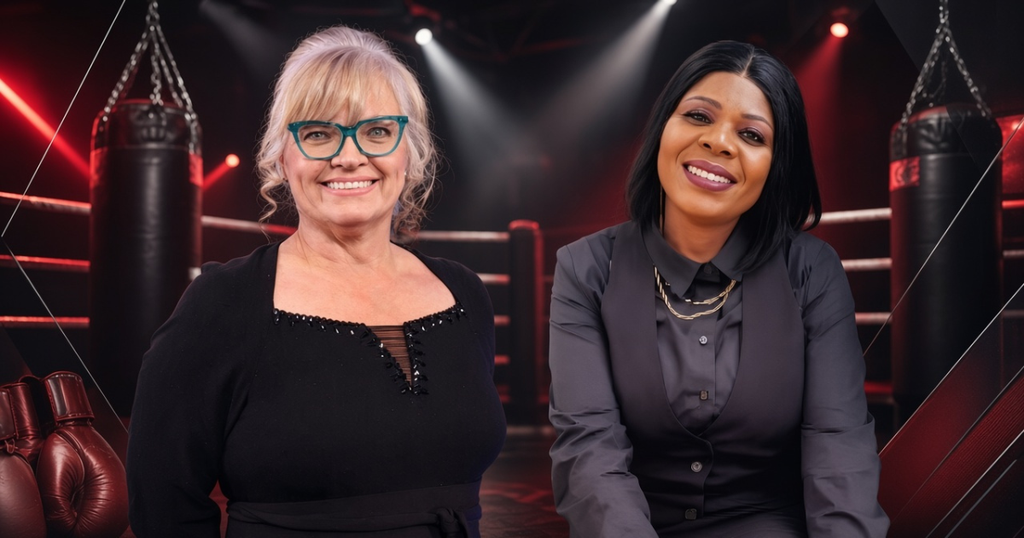
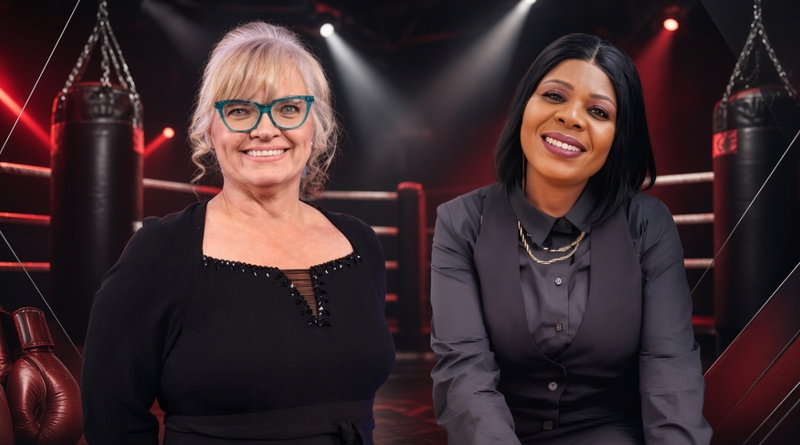
Boxing Manager Colleen McAusland and Promoter Zodwa Lubisi (Graphic: SizaNazo365 | Images: Supplied)
Promoter wants struggling boxers to benefit
For Lubisi, chief executive officer of Rise Boxing Promotions, the equipment allocation is one of the most encouraging aspects of the funding announcement.
She says many boxers struggle to access even the basic resources needed to prepare for competition.
“I am very happy about this funding because they said R300,000 from this funding is specifically going to go towards buying equipment for the boxers. I was very happy when they said that because I know a lot of boxers are struggling and need help,” Lubisi told SizaNazo365.
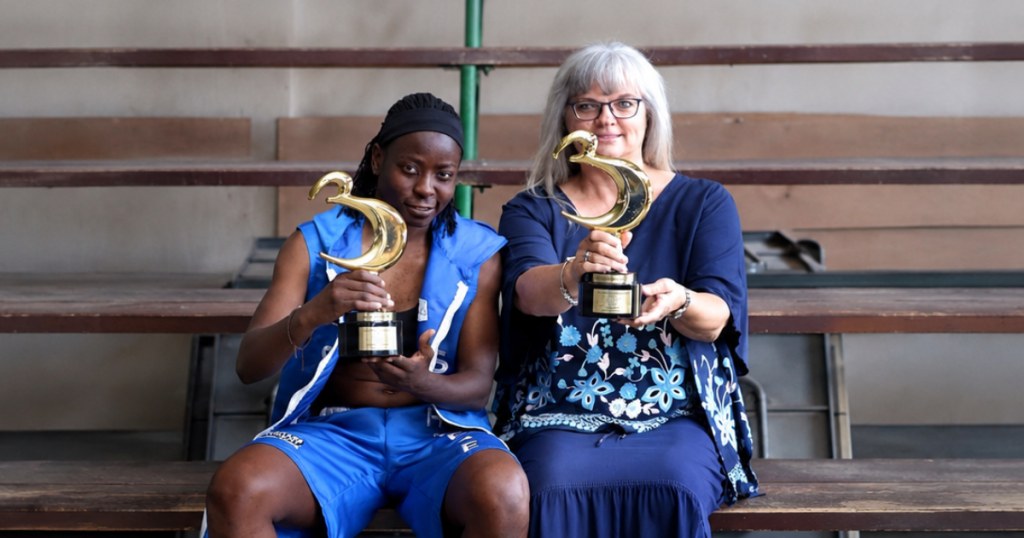
Her concerns are reflected in the circumstances of Mpumalanga female boxers Alima and Nosimphiwe Nkosi, whose training challenges were recently highlighted by this publication.
Nkosi previously told SizaNazo365 that she and other boxers train in their coach’s garage because they lack a proper gym. They do not even have a punching bag.
Lubisi said she knew about their circumstances and immediately thought of the group when she heard that funding would be directed towards equipment.
“I know them very well and it’s true they are struggling. Their situation is very bad, and I hope with this grant their situation will improve,” she said.
Despite the poor training environment, Lubisi believes the boxers have demonstrated that they possess the ability to perform in the ring.
“They are struggling but when it comes to the ring, those ladies can deliver, but when you see the gym it’s not pleasing at all. So with all the equipment they need, it means they will do even better,” she added.
Her comments highlight the importance of grassroots investment alongside support for established champions. While elite programmes can help experienced boxers pursue international success, access to basic equipment and suitable training facilities remains essential for developing the next generation.

Mpumalanga boxing coach Buti Isaac Dhlamini flanked by sibling boxing stars Nosimphiwe and Alima Nkosi (Image: Supplied)
Funding accompanied by new safeguarding policy
The financial boost was announced alongside the formal approval of BSA’s safeguarding policy, another development aimed at improving the environment in which people participate in boxing.
Signed off by BSA board chairperson Ayanda Khumalo, the policy addresses harassment, bullying, discrimination, abuse and other forms of unacceptable conduct.
It applies across the boxing fraternity, including boxers, coaches, promoters, officials and other licensees, regardless of gender, and establishes a framework for reporting concerns and promoting accountability.
Together, the funding and safeguarding measures represent progress on two fronts: providing athletes with resources to develop their abilities and strengthening protections for those involved in the sport.
However, the real test will be whether these commitments translate into practical improvements for female boxers at different stages of their careers.
For McAusland, success would mean lasting opportunities for women to develop and compete at higher levels. For Lubisi, it also means ensuring that promising fighters are not held back by a lack of basic equipment.
The R500,000 investment has raised hopes across women’s boxing. Its lasting value will ultimately be measured by the opportunities it creates, the athletes it supports and the conditions it helps change.