
After the Headlines Fade: How Safe Are South Africa’s Road Runners?
For a few days in September, the running community found itself at the centre of a national conversation about safety.
There was the disappearance and death of 38-year-old Elizabeth “Tsontso” Moselakgomo, who left her home in Rhodesfield, Kempton Park, for an afternoon run on 9 September and never returned.
There were also reports of runners having their belongings stolen during the Absa Run Your City Joburg 10K on 24 September, with participants alleging that criminals had blended into the large field of runners.
The incidents were different in nature, but they exposed a common vulnerability: people who use the roads simply to run are not immune to the crime and violence that affect South African communities every day.
And while the headlines have since moved on, the question remains.
How safe is it to be a runner in South Africa?
A tragedy that shook the running community
Moselakgomo’s death remains particularly painful because running was part of her everyday life.
Known affectionately as Tsontso, she was a mother, a member of the Run With Sole running club and a familiar figure within the running community.
After she disappeared, fellow runners and community members joined efforts to raise awareness and search for her. A memorial run was later held in Rhodesfield in her honour, with runners gathering to remember her and reflect on what had happened.
Her body was identified by her family at the Germiston mortuary on 15 September.
Five days later, family, friends, mourners and members of the running community gathered in her ancestral village of Phake in Mpumalanga, where she was laid to rest.
Her funeral became another reminder that behind the statistics and headlines was a mother, friend, daughter and runner whose life had been cut short.
But for the running community, her death also left behind an uncomfortable question: how can runners continue doing what they love without putting themselves unnecessarily at risk?
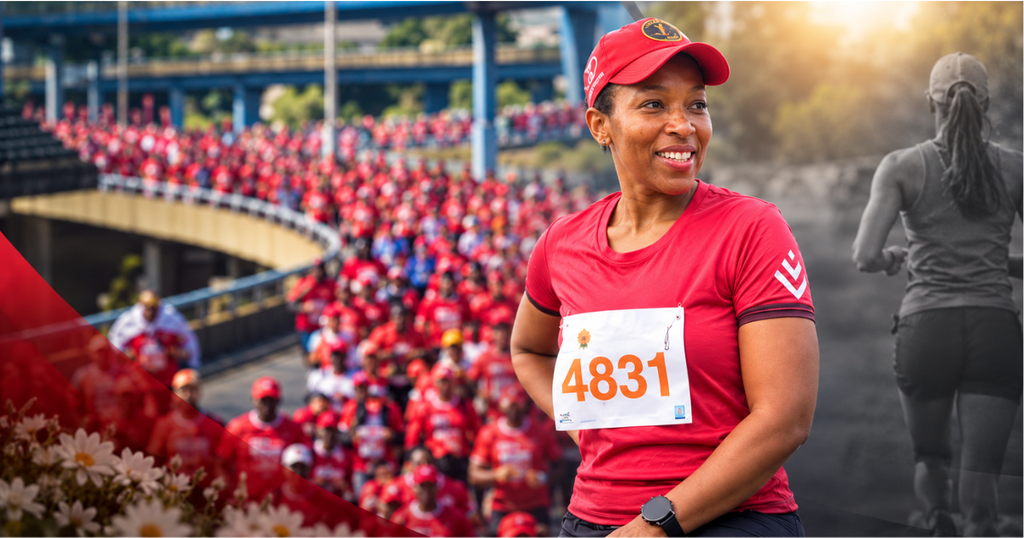
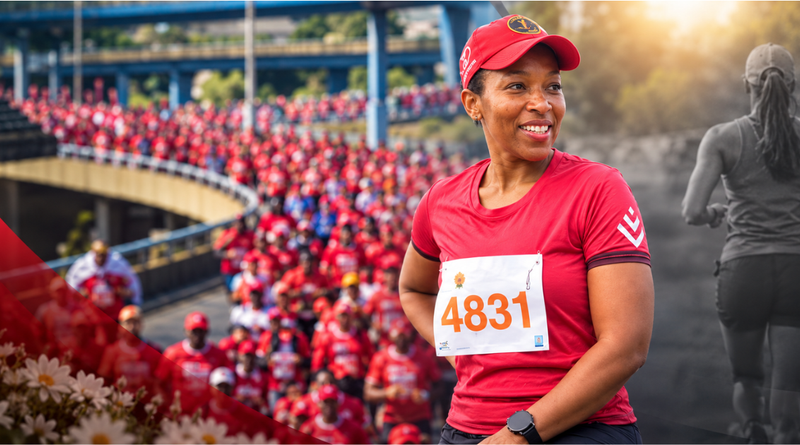
How Safe Are South Africa’s Road Runners (Graphic: SizaNazo365 | Images: Supplied)
‘Athletes have to be vigilant’
Jet Moses, Deputy Chairperson for Road Running at Gauteng North Athletics, says runners cannot rely entirely on security personnel or police officers to protect them.
Moses is involved in the management of major road races through the Still Water group, including the Absa Run Your City events in Johannesburg and Tshwane.
Reflecting on the Joburg race, he said organisers regularly warn participants about the risk of theft.
“We constantly make announcements. Unfortunately, we live in a society where there are people who take advantage,” Moses said.
Among the advice given to runners is to wear their backpacks at the front of their bodies rather than behind them.
But with more than 15,000 people taking part in the Joburg event, Moses acknowledged the enormous challenge of preventing every criminal act in such a large gathering.
“It’s difficult. You had just over 15,000 people start that event,” he said.
The organisers later confirmed that two bag-slashing incidents had been formally reported through the event’s Venue Operations Centre, while saying the race had an integrated security operation involving private security, the Johannesburg Metropolitan Police Department and SAPS.
For Moses, however, security cannot rest solely on the presence of police and private security.
“Unfortunately, it’s not going to be possible to always have police officers at every street corner, so athletes have to be vigilant,” he said.
The challenge of running alone
Moses’ strongest advice is simple: runners should avoid running alone where possible.
“Our advice to runners is always that they should run in groups.”
But even that seemingly straightforward solution is not always practical.
Some runners have work and family responsibilities that make it difficult to participate in organised running groups. Moses specifically highlighted women who may have children and other responsibilities at home.
“Unfortunately, that might not be the case with some runners, especially the female runners who stay at home with kids and are unable to join running groups, and go on long runs alone. That is a challenge.”
That challenge becomes even more serious when runners train during low-light hours.
“Our plea, especially to ladies, is not to run alone and not to run in the dark, in the early hours of the morning or in the evening when it’s dark.”
His warning is not limited to women.
Moses said men also need to remain alert because they too can become victims of crime.
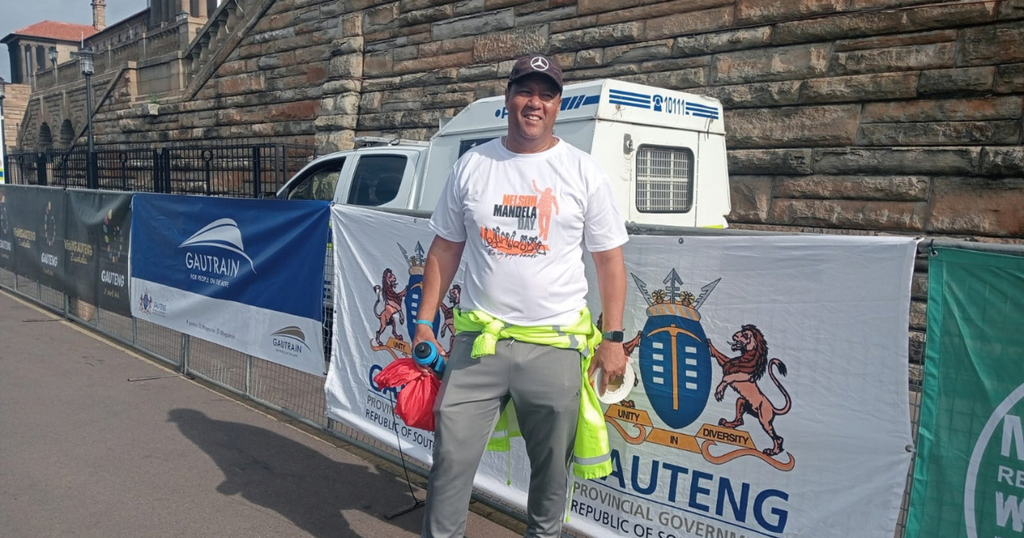
Athletics Gauteng North deputy chairperson of road running Jet Moses (Image: Supplied)
Why running clubs matter
One possible answer lies within the running community itself.
South Africa has a strong club-running culture, and Moses believes runners should make greater use of it.
“In South Africa we have the club system and we encourage runners to join clubs.”
For someone new to running, a club can provide much more than a training programme.
It creates a network of people who know one another, understand local routes and can organise group runs.
“Because then you will know the rules of the road, you get to know people within your running community, [and] it lets you form running groups and run together,” Moses said.
In the aftermath of Tsontso’s death, that sense of community was evident.
Runners who knew her, and others who did not, came together to search for her and later to honour her memory.
Her death demonstrated the strength of the running community — but also exposed why that community may be an important part of the solution.
Simple measures, better habits
Moses also urged runners to pay attention to basic road-safety and visibility measures.
For those who run early in the morning or later in the evening, he recommends wearing reflective clothing.
He also advises runners to face oncoming traffic where appropriate.
These measures cannot eliminate the risk of crime or accidents, but they can improve visibility and give runners greater awareness of what is happening around them.
The message is therefore not that runners should stop running.
Rather, it is that running in South Africa requires awareness of the environment in which the sport takes place.
The bigger question goes beyond running
The safety of runners cannot be separated entirely from the broader crisis facing South Africa.
Tsontso’s death occurred amid growing concern over the deaths of women in and around Ekurhuleni. Her funeral in Phake came as communities were demanding stronger action to protect women.
President Cyril Ramaphosa would later address the nation on 29 September, announcing an urgent response following public outrage over the discovery of multiple women’s bodies in the area.
For women runners, the issue is therefore about more than whether they have a reflective vest or whether they belong to a running club.
It is about whether women should be able to leave their homes, exercise and return safely.
As one of the country’s most accessible forms of exercise, road running takes people into streets, parks and public spaces every day. It is enjoyed by elite athletes chasing records, recreational runners improving their health and ordinary people simply looking for an hour of freedom from the pressures of daily life.
They should not have to choose between that freedom and their safety.
When the headlines disappear
There is a tendency for shocking incidents to dominate the news cycle for a few days before attention moves elsewhere.
Tsontso’s name, however, should not become another headline that disappears once the next story arrives.
She was a runner who went out for an ordinary run and never came home.
She was later laid to rest in Phake, surrounded by people who loved her and members of a running community that had spent days hoping for a different outcome.
The Absa Run Your City Joburg 10K, meanwhile, showed another side of the safety problem: even organised events involving thousands of people, security personnel and law enforcement can face criminal activity.
Neither situation has an easy solution.
But both should prompt a lasting conversation about how South Africa protects people who use public spaces to run, train and live.
For runners, Moses’ advice is clear: run with others where possible, avoid isolated routes and dark hours, remain vigilant, wear reflective clothing in low-light conditions and consider joining a running club.
For race organisers and authorities, the responsibility is broader: continually assess security arrangements, respond to reported incidents and find ways to make participants feel safe.
And for society as a whole, Tsontso’s death raises an even more fundamental question.
Why should someone have to fear for their life simply because they went out for a run?
That is a question worth asking long after the headlines have disappeared.